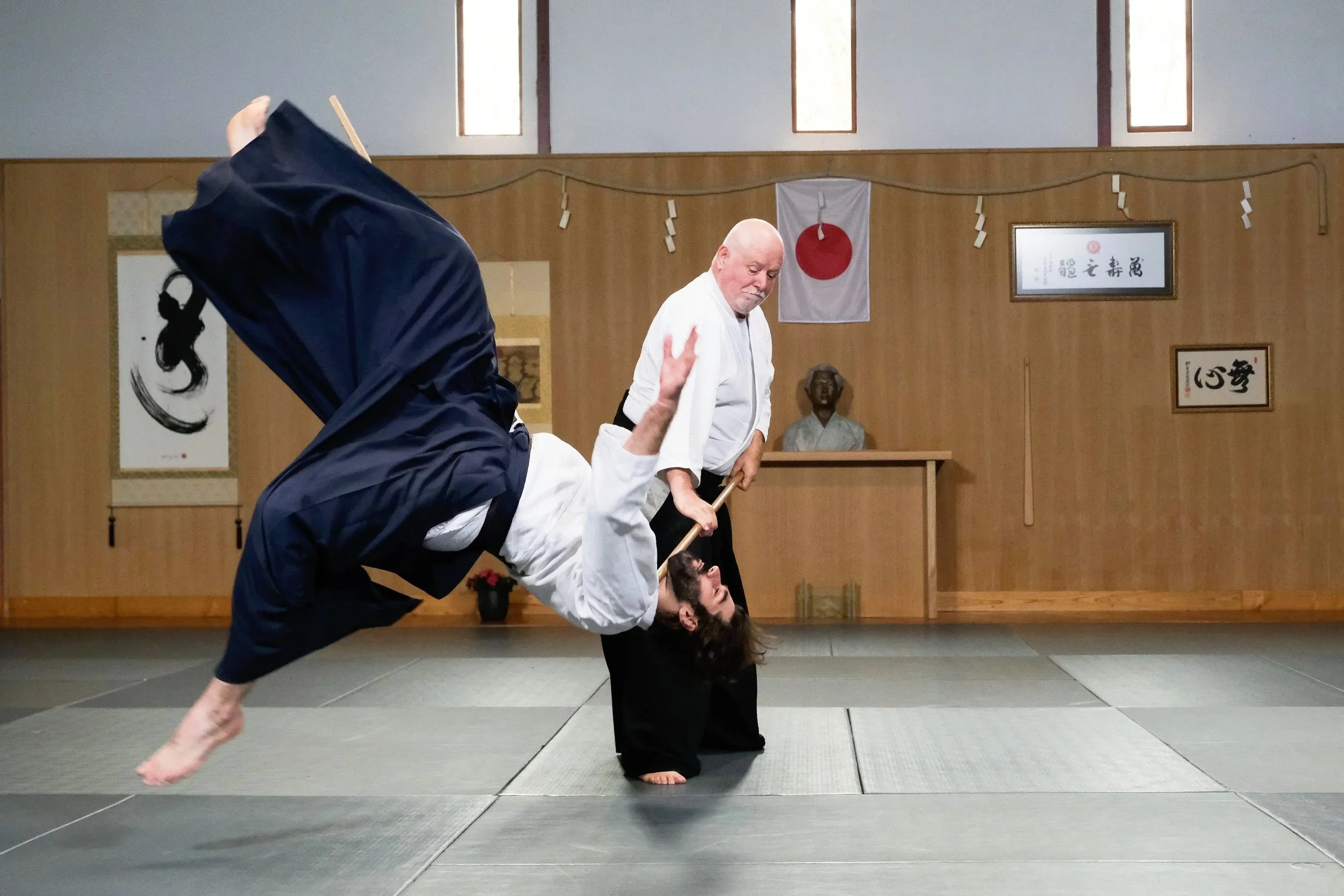
Los Angeles Aiki Kai
A Brief History
Founded in early 1956, Los Angeles Aiki Kai is the oldest aikido dojo in the USA. It has played a central role in the development and transmission of traditional aikido in Los Angeles.
The original dojo was located in the Seinan (Jefferson–Crenshaw) area of Los Angeles. In 1967, it relocated to its current location in Los Angeles, near Culver City, where it continues to serve the aikido community today.
Los Angeles Aiki Kai is the official shibu dojo of the Kokusai Aikido Kenshukai Kobayashi Ryu, operating under the direction of Cognard André, Hanshi 8th Dan.
The dojo’s chief instructor is Ishibashi Robert Shihan, 7th Dan, who upholds the tradition, technical excellence, and spirit of Kobayashi Hirokazu Ryu aikido.
Our Mission
Our mission is to preserve, transmit, and promote the practice of traditional aikido through the lineage of Kobayashi Hirokazu Soshu, while honoring the technical, ethical, and philosophical foundations of the art.
Guided by the principles of Ethical, Aesthetic, and Efficient movement, our aikido emphasizes balance, harmony, and precision, respecting etiquette.
We practice aikido with a clear commitment to its core values:
No domination. No submission. No compromise.
Mizukami Dojo
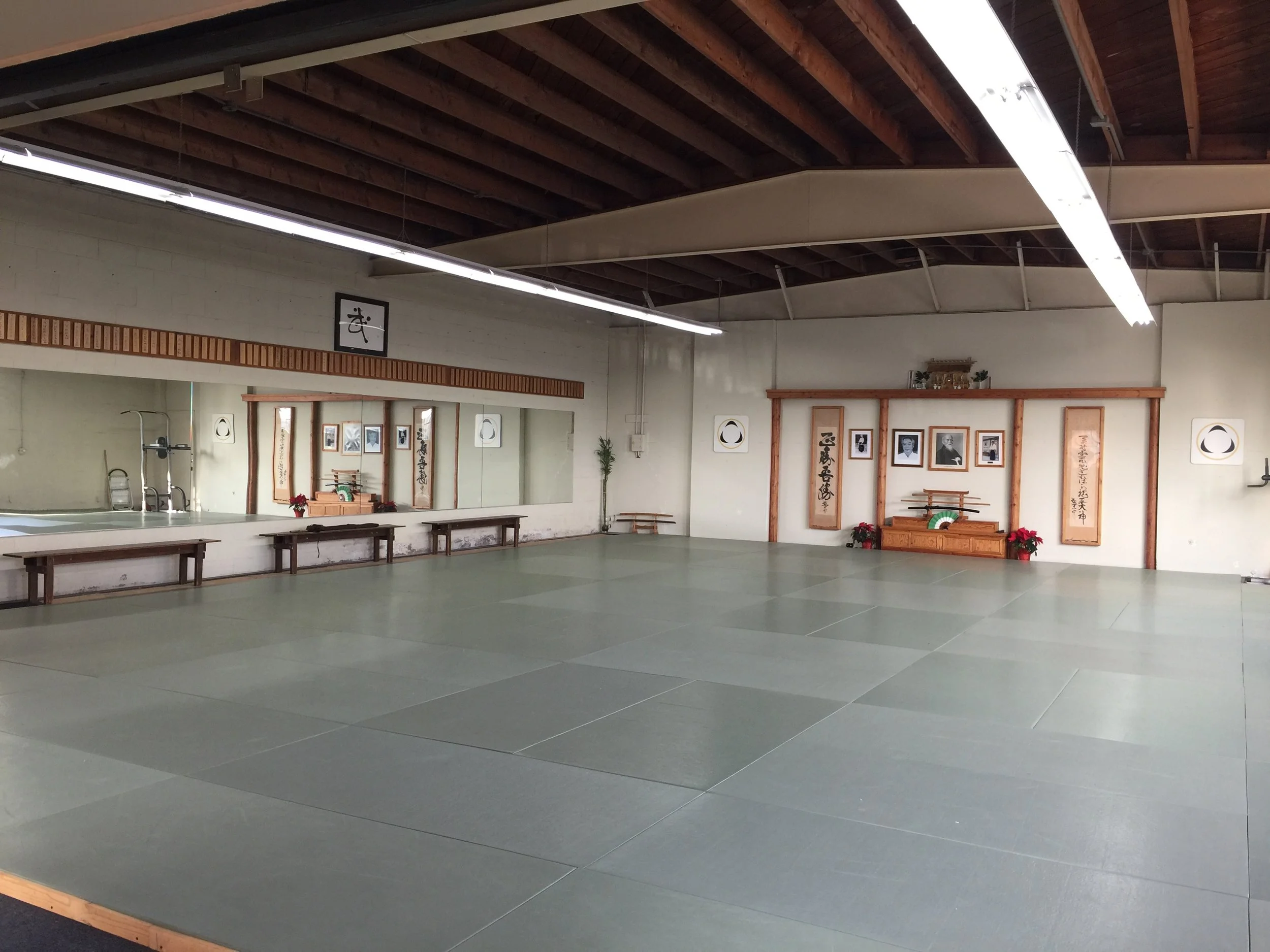
The Mizukami Dojo is named in honor of Chief Instructor Mizukami Daniel Sensei, whose dedication, teaching, and lifelong passion for aikido profoundly shaped the students and community of Los Angeles Aiki Kai for more than 55 years.
His legacy continues to inspire the practice of traditional aikido and the values transmitted within the dojo today.
Mizukami Sensei’s martial spirit and rigorous approach to training continue to serve as the foundation of our aikido practice, guiding both technical development and personal discipline within the dojo.
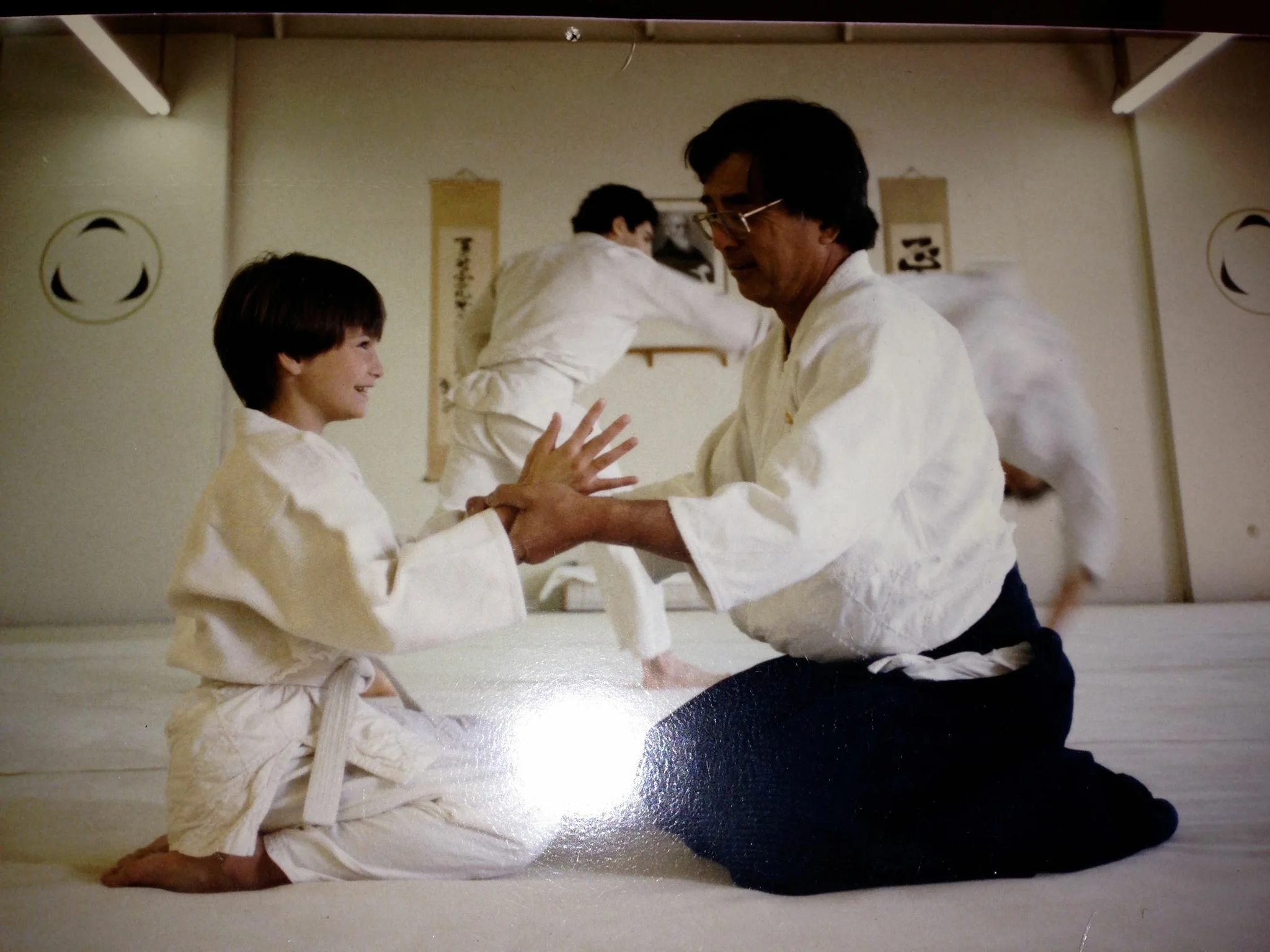
Aikido Image

The Aikido Image, designed in 1961 by Los Angeles Aiki Kai Chief founding dojo-cho Yoshida Clement Sensei, represents the core visual and philosophical concepts of aikido.
The image is composed of three black crescent shapes arranged in the form of a triangle, set within a white circle and enclosed by a golden ring. Each element carries deep symbolic meaning rooted in traditional aikido principles.
The three black crescents represent body, heaven, and earth, expressing the unity and balance essential to aikido practice.
The white circle symbolizes mind, or ki, reflecting clarity, harmony, and internal energy.
Together, the triangle and circle illustrate the fundamental forms used in the application of aikido techniques.
The color black signifies the infinite potential of humanity, while white represents the purity of the aikido ideal.
The golden ring symbolizes the “golden vapor” that surrounded O-Sensei at the moment of his enlightenment and realization of the philosophy and essence of aikido.